Decision guides

Guides for choosing AI automation stacks

Search entry points for stack concepts, tool roles, cost boundaries, workflow choices, and failure modes.

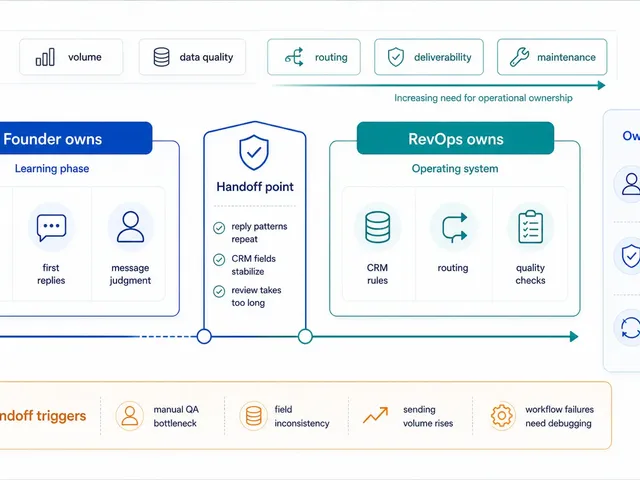
Ownership handoff diagram showing when a founder should transfer outbound automation to RevOps as volume, routing, deliverability, and maintenance needs increase.

A founder-to-RevOps handoff guide for outbound automation: ownership triggers, CRM readiness, field contracts, review cadence, and scale controls.

Decision entry

When should a founder hand off outbound automation ownership to RevOps? Next: Founder-Led Outbound Lite Stack.
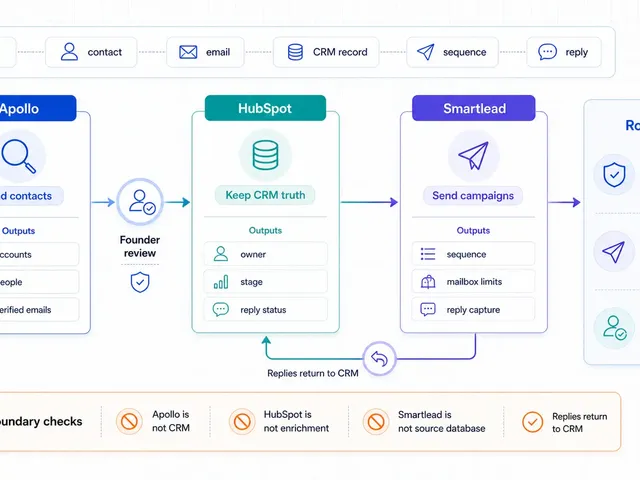
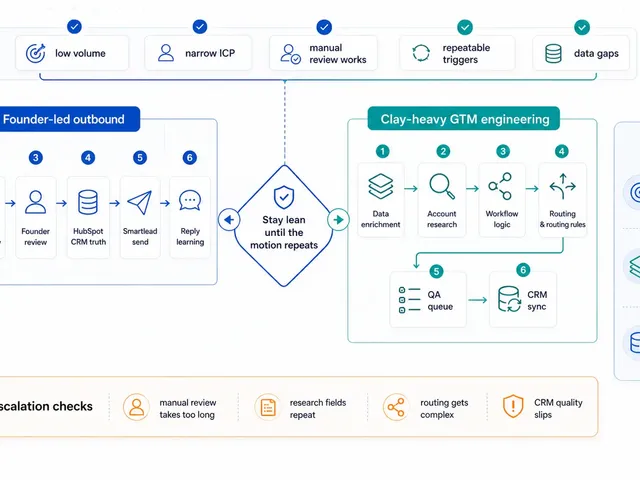
Diagram showing how Apollo, HubSpot, and Smartlead split roles in a founder-led outbound stack, with Apollo finding contacts, HubSpot keeping CRM truth, and Smartlead sending campaigns.

A practical role split for Apollo, HubSpot, and Smartlead in founder-led outbound: discovery, CRM truth, sending, reply capture, and field handoffs.

Decision entry

How should a founder split Apollo, HubSpot, and Smartlead in a lean outbound automation stack? Next: Founder-Led Outbound Lite Stack.
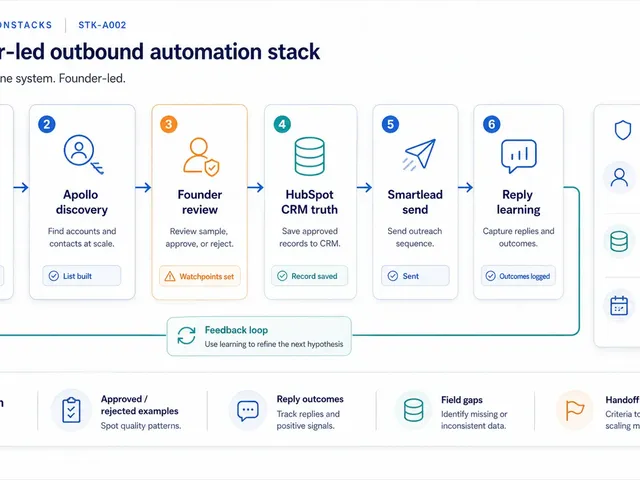
Founder-led outbound automation stack diagram showing segment hypothesis, Apollo discovery, founder review, HubSpot CRM truth, Smartlead send, and reply learning feedback loop.

A founder-led outbound automation stack is a lean learning system: Apollo for discovery, HubSpot for truth, Smartlead for sending, and explicit review rules before scale.

Decision entry

What should a founder-led outbound automation stack include before it becomes too complex to maintain? Next: Founder-Led Outbound Lite Stack.
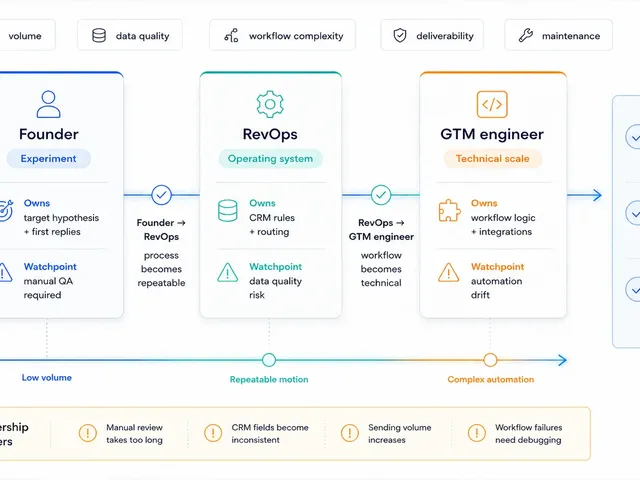
Diagram showing outbound automation ownership moving from founder experiments to RevOps operating system ownership and GTM engineer technical scaling, with handoff triggers and ownership principles.

A decision-rights guide for outbound automation ownership: founder-led experiments, RevOps operating rules, GTM engineering scale, and the handoff triggers.

Decision entry

Who should own outbound automation as the motion moves from experiment to repeatable system? Next: SMB Outbound Velocity Stack.

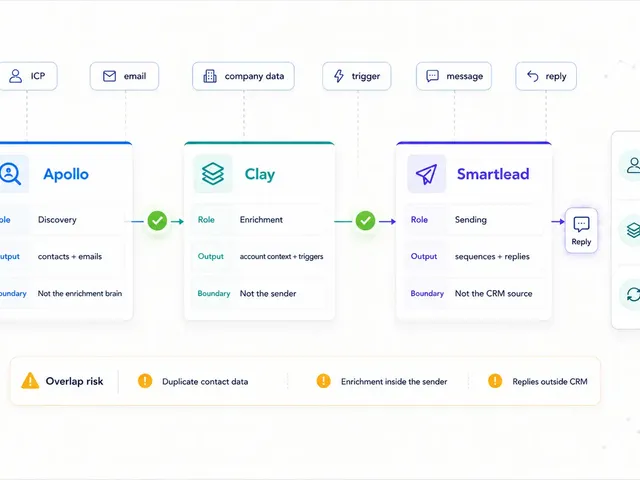
Diagram showing the role split between Apollo, Clay, and Smartlead in an AI outbound automation stack, with Apollo for discovery, Clay for enrichment, Smartlead for sending, and overlap risks.

A role-based comparison of Clay, Apollo, and Smartlead for outbound automation: discovery, enrichment, sending, reply capture, and where overlap creates risk.

Decision entry

What practical role should Apollo, Clay, and Smartlead each own in an outbound automation stack? Next: SMB Outbound Velocity Stack.

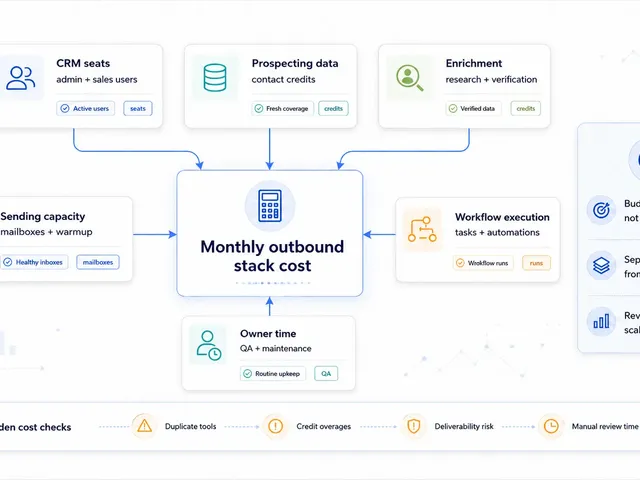
Diagram showing the monthly cost model for an AI outbound automation stack, with CRM seats, prospecting data, enrichment, sending capacity, workflow execution, owner time, and hidden cost checks.

A practical cost model for outbound automation: CRM seats, prospecting data, enrichment credits, workflow runs, sending capacity, and owner time.

Decision entry

What will this outbound automation stack cost after software, credits, sending, and owner time are included? Next: SMB Outbound Velocity Stack.

Foundation guideOutbound sales

What is an AI outbound automation stack?

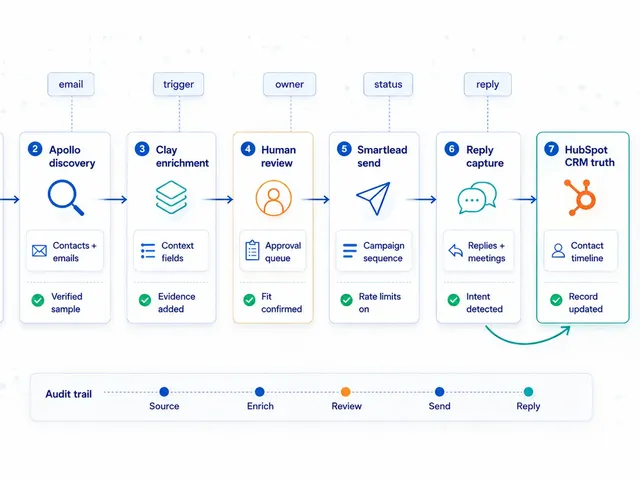
Diagram showing an AI outbound automation stack where a record moves from source list through Apollo discovery, Clay enrichment, human review, Smartlead sending, reply capture, and HubSpot CRM truth.

A practical definition of an AI outbound automation stack: the record path, ownership checks, CRM truth, and review points that keep STK-A001 usable.

Decision entry

Can your team trace one outbound record from source list to reply without losing ownership? Next: SMB Outbound Velocity Stack.